Your AI travel assistant knows where you're from—and it's changing how you vacation.
Image: Dan Novac
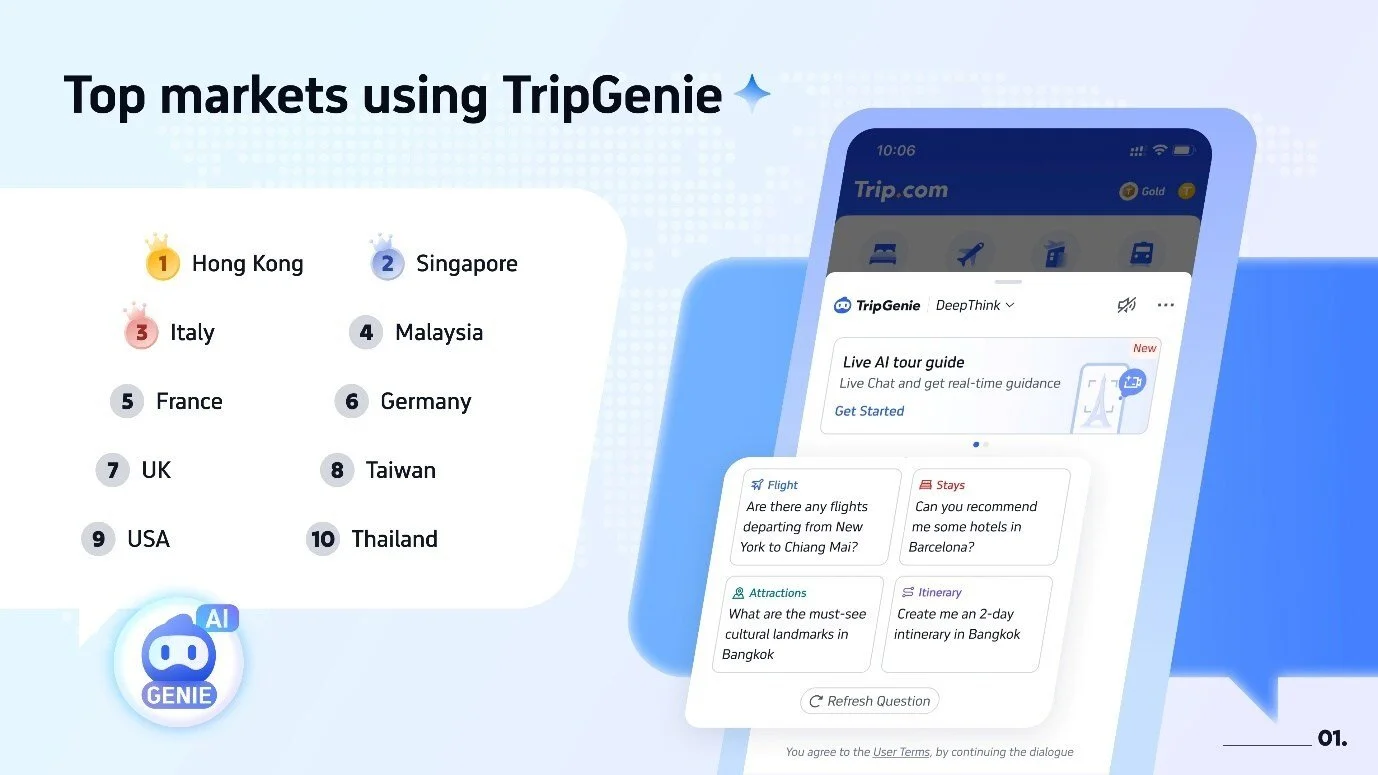
Three years of TripGenie data reveals something more interesting than how many people are using AI to travel. It reveals how differently they're using it.
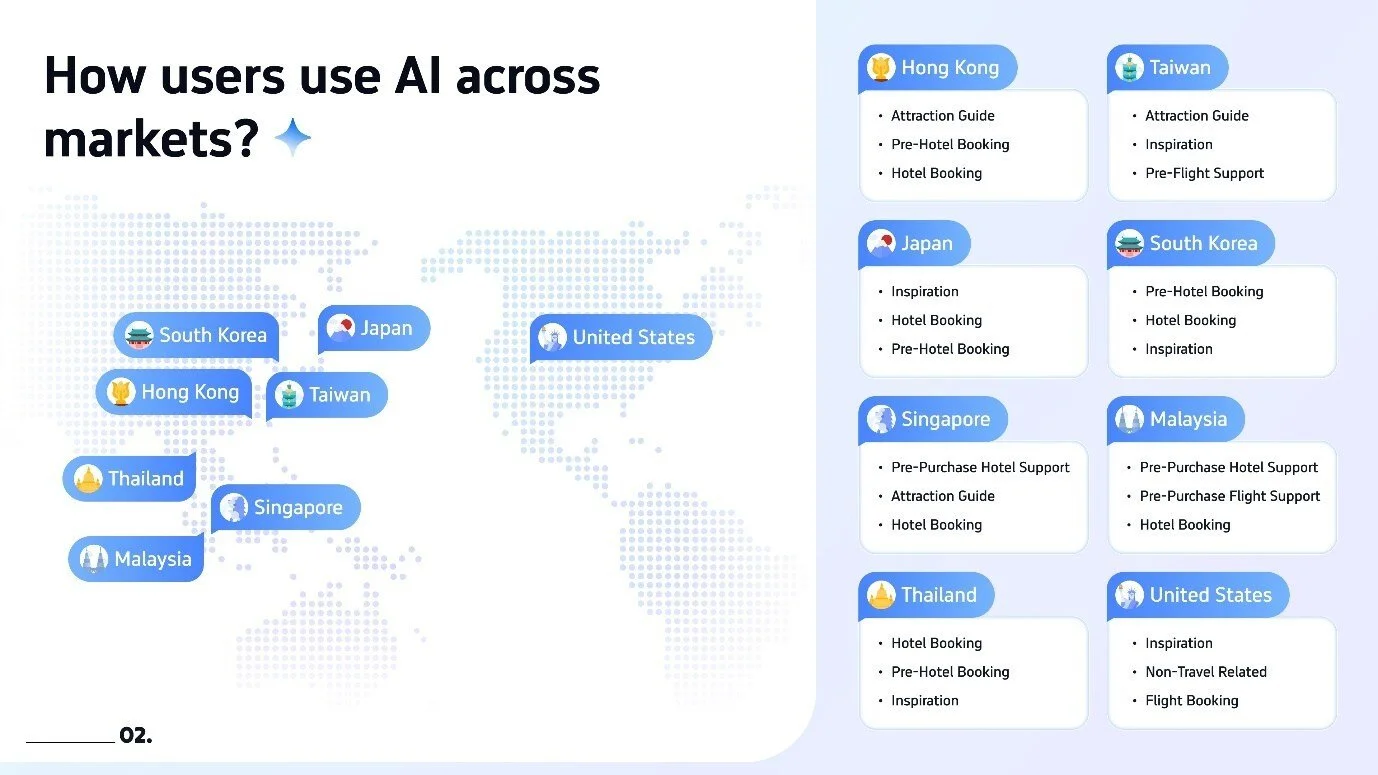
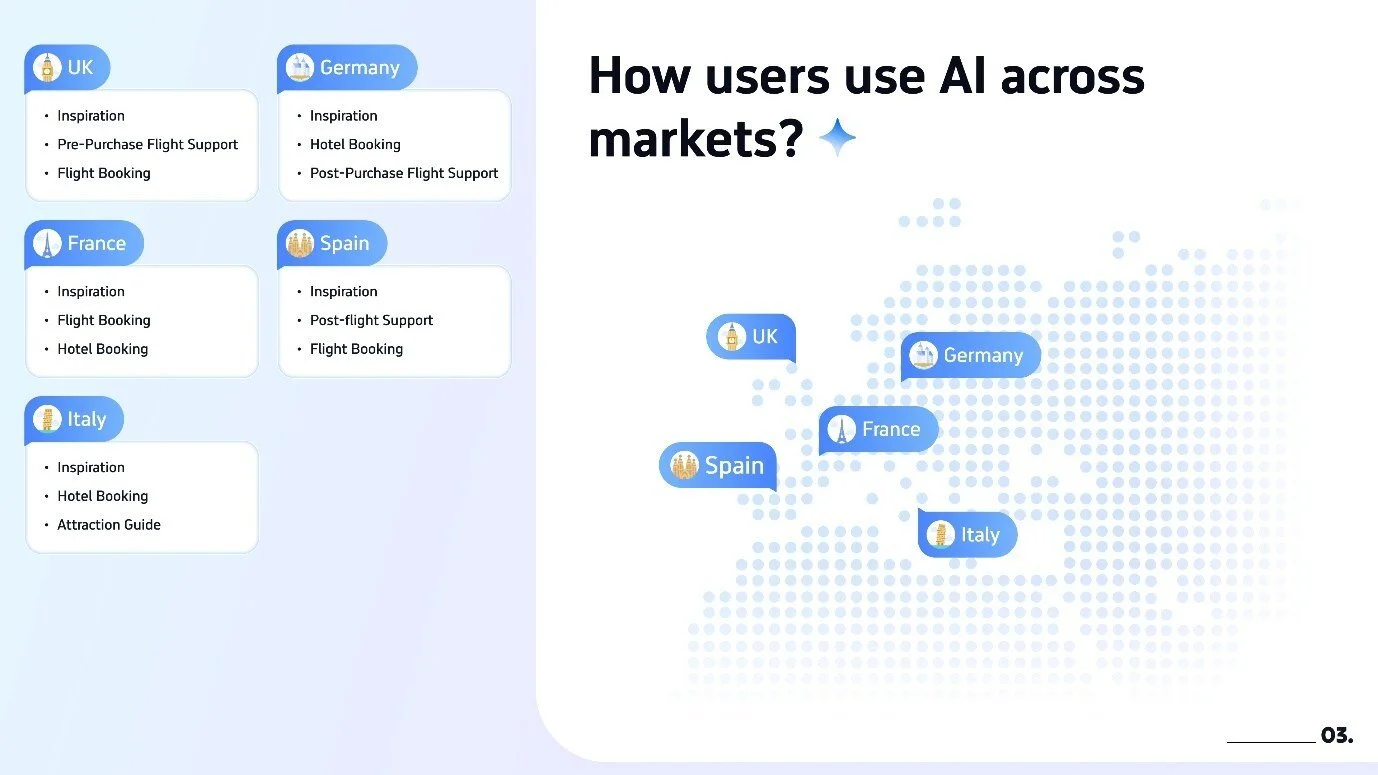
Here's a detail worth sitting with. Travellers in Hong Kong, Singapore and Malaysia use AI as a real-time decision-making partner — booking hotels, finding attractions, getting in-destination inspiration on the fly. Meanwhile, travellers in Germany and the United Kingdom are consulting the same tool weeks before departure, methodically working through flights and accommodation to reduce risk before they've even packed a bag.
Same technology. Entirely different relationship with it.
Trip.com's AI travel assistant TripGenie just marked its third anniversary, and the data it's released is less a product milestone and more an accidental portrait of how culture shapes the way we move through the world — and increasingly, how we ask machines to help us do it.
The numbers first
AI-assisted bookings on Trip.com grew 400% year-on-year. Use of core TripGenie tools—hotel comparison, menu assistance, live translation—grew 300%. Nearly 60% of all TripGenie interactions are now booking-related. Among users who used the hotel comparison feature, more than half chose the hotel the AI recommended.
These are not numbers that describe a novelty. They describe a habit.
What the cultural data actually says
The most revealing finding isn't volume—it's timing. South Korean and Taiwanese travellers frequently finalise hotel bookings just days before departure, leaning on AI for last-minute location and amenity decisions. Japan, despite being geographically proximate, sits at the opposite end: travellers book weeks ahead, preferring certainty over spontaneity. Southern European markets—Italy, France, Spain—land somewhere in the middle, moderately spontaneous, culturally comfortable with a degree of beautiful uncertainty.
What TripGenie's data suggests is that AI doesn't flatten these differences. It accommodates them. The same tool supports a Hong Kong traveller deciding where to eat dinner tonight and a German traveller building a two-week itinerary in January for a June trip. That's a harder design problem than it sounds.

The part that signals something bigger
A growing share of users are now uploading images to TripGenie—photos of menus, street signs, landmarks, hotel rooms, transport information—and asking questions from them. Users who engage this way have a 7-day revisit rate twice that of the platform average.
That's not a travel statistic. That's a trust signal. When someone photographs a menu in a language they don't speak and holds it up to an AI, they're not just using a feature. They're handing over a moment of genuine vulnerability, “I don't know what this says, help me,” and expecting the technology to meet them there.
Three years in, TripGenie's data suggests that for a growing number of travellers, it does.
