The James Dyson Award just opened. Here's the bar you're competing against.
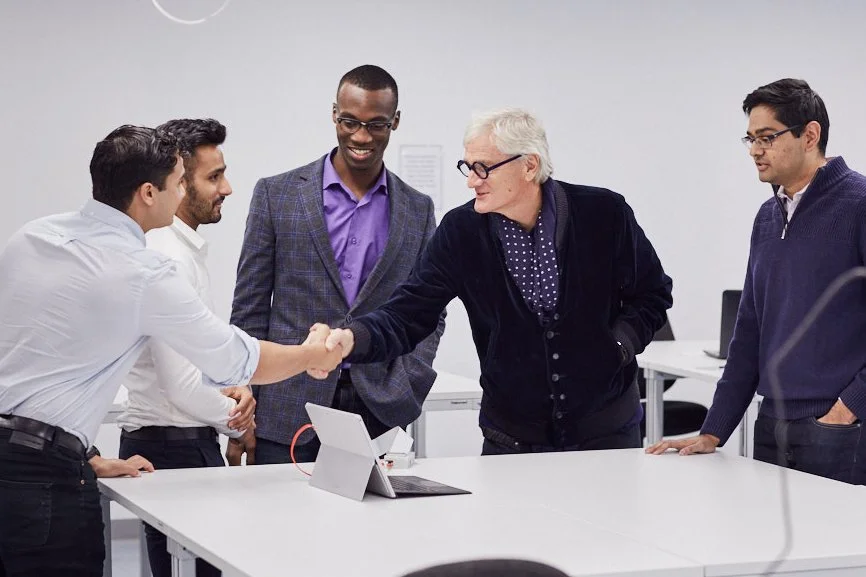
Image: James Dyson Award, The Skan
A wearable robot. An AI water monitor. A keyboard that listens to shaking hands. The 2026 James Dyson Award just opened for submissions—and last year's winners set a quietly extraordinary standard.
The James Dyson Award opened for 2026 submissions this week, inviting design and engineering students across 28 countries to present ideas that solve real world problems.
"I established the Award to encourage young doers focused on solving the problems they see in the world, not grandstanding about them," Dyson said.
That distinction feels pointed in 2026. Technology is unrivalled at announcing itself. The Dyson Award has always been more interested in what it quietly corrects.
Last year's winners are the evidence.
What last year's winners actually built
Bradley Wagman and Viktor Bokisch are Harvard students and U.S. Army veterans. Foot drop affects millions of people globally, and the existing solutions are rigid, bulky, and carry the particular indignity of looking exactly like what they are: medical equipment strapped to a body that has failed in some visible way. Their invention, Sole, is a lightweight wearable robotic device that moves with the body rather than constraining it—built outside a formal lab, in their own time. It took the US National prize.
"Our vision is making assistive devices that people are proud to wear," said co-creator Wagman. Two words—proud, wear—that contain an entire philosophy of design and an implicit critique of everything that came before.
Filip Budny, a PhD candidate in nanotechnology at Warsaw University of Technology, won the global Sustainability prize for WaterSense—an autonomous, AI-powered water quality monitor that replaces occasional manual sampling with continuous real-time alerts. Someone decided a river deserved more attention than it was getting.
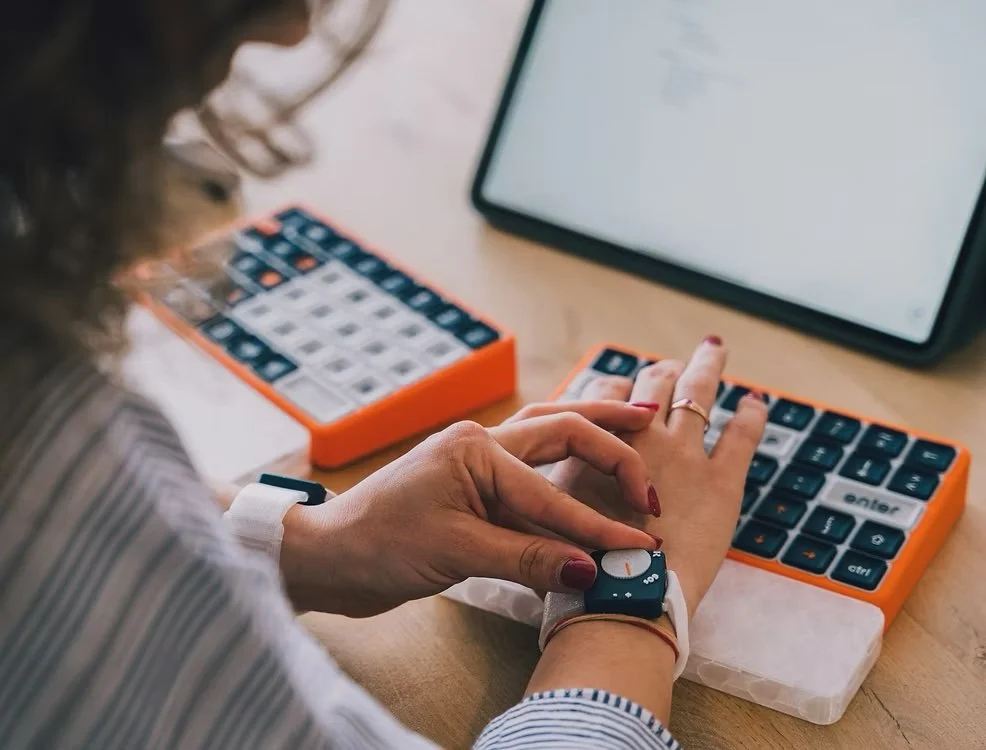
Image: Alessandra Galli
Alessandra Galli, an Italian product designer from Delft University of Technology, won the global Medical prize for OnCue—a smart keyboard for people with Parkinson's that uses haptic and visual cues to work with motor symptoms rather than against them. There are approximately 10 million people living with Parkinson's worldwide. Most of them use keyboards designed for hands that do what they're told.
If you've been paying attention to a problem nobody else seems to have noticed, the deadline is July 15. National winners receive $6,500. Sir James Dyson selects global winners personally—they receive $40,000 and a platform to take their invention to market.
